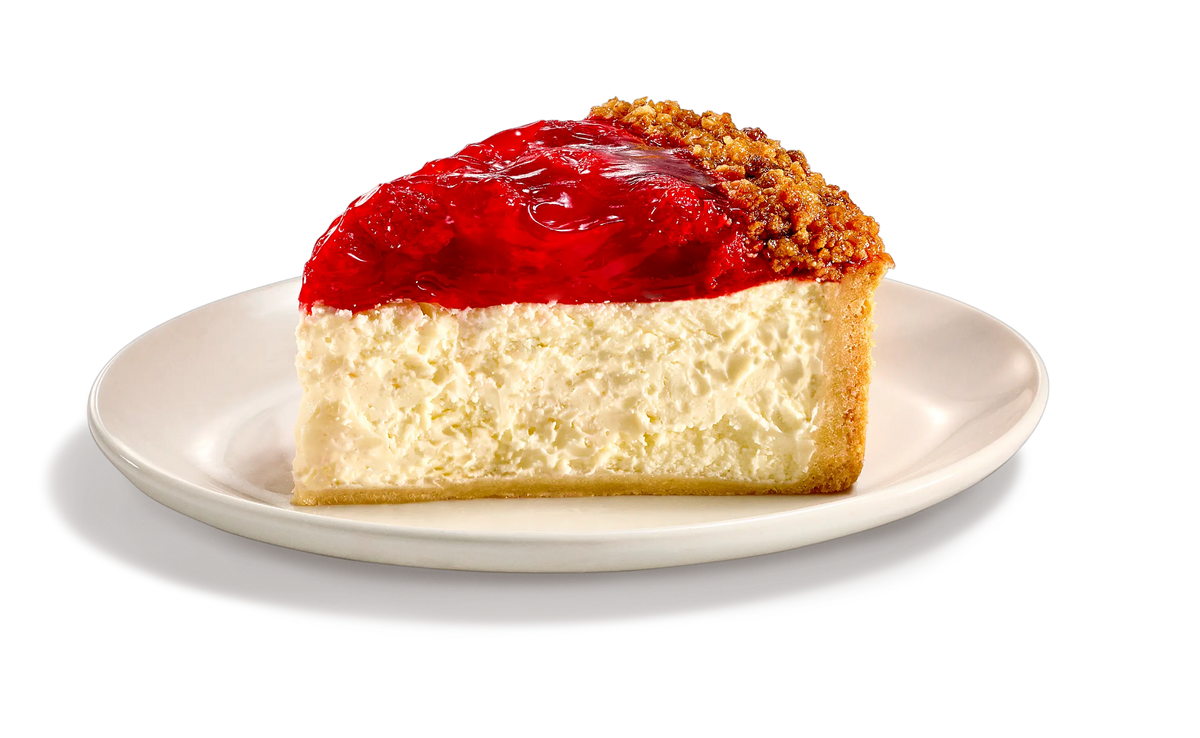
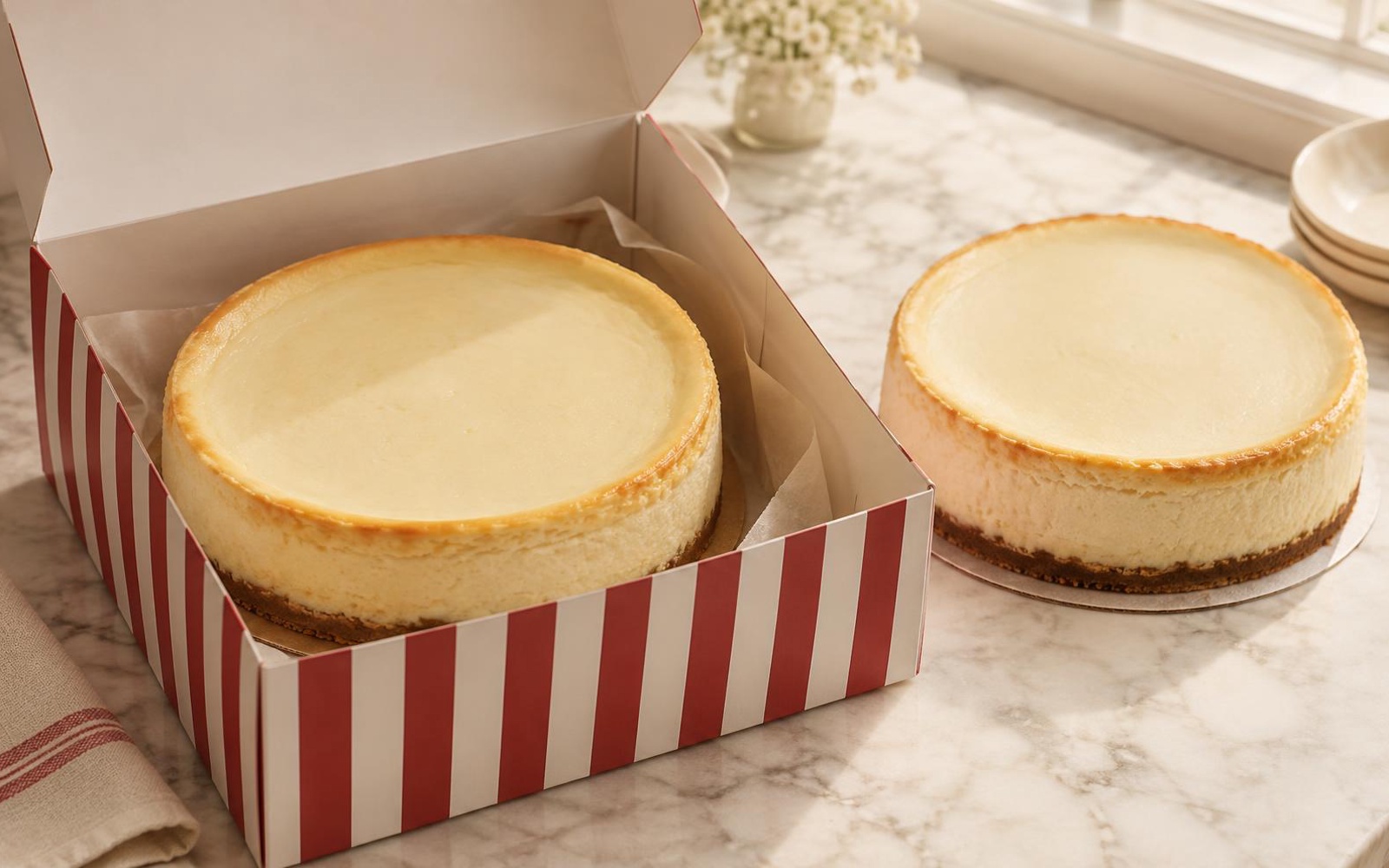
Junior's has been selling cheesecake out of Brooklyn since 1950, and people genuinely love sending it. A cake goes to a client who just closed a deal, a parent on their birthday, an office that shipped something big, a friend with a newborn at home. The storefront had grown for over a decade around the assumption that one customer equals one address, so the most natural thing a Junior's customer wants to do — send cake to someone else — was the clumsiest thing on the site. Underneath it all the store was still running Magento 2, patched and extended for years to do things the catalogue was never designed to do. We ported the whole store across to Shopify — every product and collection, every customer account, the full order history, saved recipients and subscription records, and a permanent redirect for every URL that already carried search equity — then rebuilt the storefront around gifting and multi-recipient ordering, replaced the after-hours phone with an AI voice agent that takes real orders while the bakery is closed, and built a layered set of lifecycle campaigns that keep the right cake in front of the right customer all year long.
Project goals
/objectives/
01
Leave Magento 2 without paying for it in lost orders
More than a decade of products, customers, order history and indexed URLs lived in Magento. Everything had to arrive on Shopify intact — including the pages Google already ranked — or the migration would be paid for in organic sales.
02
Make sending a cake as easy as buying one
One person orders, another receives. Recipient address, delivery date and gift message belong in the checkout as first-class fields, not squeezed into a notes box.
03
Let one order go to many addresses
Offices, clients and families spread across the country were placing three orders and paying three shipping fees. One checkout, many recipients, one invoice.
04
Grow order volume without discounting everything
A blanket percentage off buys volume at the cost of margin on orders that were already going to happen. The promotion had to work with the shipping instead of against it.
05
Keep selling when the bakery is closed
Gift orders arrive at 9pm and on Sundays. Unanswered calls in December were orders going to a competitor, so the store and the phone both needed to work without staff.
Our approach
/how we worked/
The work started with the platform. The catalogue, customer records and order history were mapped out of Magento 2 into Shopify, the custom fields that had been holding recipient addresses in assorted workarounds were rebuilt as proper properties on the product and customer records, and every legacy URL with search equity was mapped to its new home before a page went live. Only then did the rebuild begin — with the order itself rather than the theme. We separated sender from recipient at the data level, so address, delivery date and gift message attach to the person receiving the cake while payment and confirmation stay with the person who bought it — the same model then made multi-recipient orders and repeat gifting straightforward instead of a custom project. Because the same data now drives the storefront, the gift message, the delivery date and the recipient address follow an order all the way into fulfilment, which is where most of the old manual fixes used to happen. On top of that we built a cart-level offer that pairs a discounted second cake with shipping that was already going out, then built the two systems that keep the store trading when nobody is in the bakery: a lifecycle campaign set that runs the whole relationship between orders, and an AI voice agent on the phone that takes real orders rather than messages. The storefront and seasonal collections were rebuilt on Shopify at the same time, so the team can publish a holiday shop in an afternoon without a developer or a plugin update.
What we built
/in detail/
/01 — gifting/
Sending cake to someone else is half the business
A customer in Chicago wants a cheesecake to arrive at a door in Austin on a Thursday, with a note in the box. Under the old checkout that order either went through with the wrong address or did not happen at all, because the site quietly assumed the buyer and the recipient were the same person standing at the same door.
Recipient name, address and phone captured separately from the sender, so billing and delivery never get crossed.
A delivery date chosen against real shipping windows, rather than a promise the bakery cannot keep in a heatwave.
A short gift message printed on the insert, with no prices or invoices anywhere in the box.
The order confirmation goes to the sender and the delivery notice goes to whoever receives it.
/02 — multi-recipient/
One checkout, a different address for every cake
Office managers, corporate buyers and families with relatives in three states were placing three separate orders, making three payments and paying three shipping fees for what was really one purchase. The multi-recipient flow lets a single order carry as many cakes as the customer needs, each one going somewhere else.
Any number of cakes in one order, each with its own recipient, address, delivery date and gift note.
One payment and one itemised invoice, so a corporate buyer can file it and a family can split the cost.
Saved recipients and a repeat-order action, which turned a one-off December gift into a standing annual order.
Volume and wholesale pricing handled inside the same store, instead of a second portal the team had to maintain.
/03 — the add-on cake/
A discount that works with the shipping, not against it
Sitewide percentage discounts are an expensive way to buy volume, because they cut the margin on orders that were going to happen anyway and train customers to wait for the next code. The lever that actually moved the numbers was the second cake: when a full-price cake is in the cart, the customer is offered another at a reduced price with the shipping already covered. The box is going out regardless, so the incremental cost is product, not freight.
The offer appears in the cart while the decision is being made, not in a banner the customer scrolled past an hour earlier.
The second cake adds no shipping, which is what lets the price look generous while the margin holds.
Discount depth stays shallow and targeted, instead of a blanket code that flattens the whole catalogue.
The flow is measured on attach rate and average order value, not on how many codes were redeemed.
15%
Increase in average order value after the add-on offer went live
/04 — the birthday club/
A birthday is a date you already have, and a cake is the obvious gift
The Birthday Club is the quietest thing in the campaign set and the one that does the most work. A customer joins once — most of them while they are already placing a gift order for somebody else — and from then on Junior's holds the one date in the year when sending a cheesecake needs no explanation at all. There is no sitewide sale attached to it and no urgency invented to make it relevant: the offer only ever appears in the month it is genuinely someone's birthday, which is how the list keeps growing without the catalogue being discounted into the ground.
Joining sits inside the gift checkout and in the footer, and asks for a month and a day only — no year, no birthday reminders the customer did not expect.
The discount is scoped to the birthday month and to the person whose birthday it is, so it reads as a gift from the bakery rather than another code from a brand.
The send sequence runs backwards from the date: a heads-up a week out, the offer itself on the day, and one gentle reminder late in the month. Then silence until next year.
Recipients join too. Someone who received a cake can claim the same offer on their own birthday, which turns a gifted cake into a second one twelve months later.
Everything attaches to the same customer record as the store and the phone line, so a birthday order placed at nine on a Sunday night still lands in the right profile.
400%
Increase in Birthday Club subscribers since the birthday-month discount launched
/05 — phone and campaigns/
A phone that answers at midnight, and campaigns that never sleep
Holiday gifting does not happen at ten in the morning on a Tuesday. Questions about shipping cut-offs, last-minute gift requests and full orders arrive in the evening and at weekends, when the team is not there to answer. That gap used to be handled by voicemail, which is a polite way of losing the order. Two systems close it now: a voice agent that picks up the phone, and a campaign layer that keeps working on every customer between orders.
The AI phone agent answers in a natural voice within a ring or two, knows the real shipping calendar, quotes a delivery date, takes the order and the payment, then drops it into the same fulfilment queue as the website — nothing gets re-keyed in the morning.
It is scoped rather than open-ended: order lookups, delivery dates, shipping cut-offs and full purchases are handled, while refunds, custom requests and complaints hand off to a person with a full transcript attached.
The campaign set is sequenced rather than batch-and-blast: welcome, birthday club, abandoned checkout with the cake still in the cart, shipping-deadline reminders timed to the carrier rather than the calendar, a cross-sell to the recipient's next occasion, and win-back for gifters who have gone quiet.
Everything reads from the same customer record as the store, so someone who first arrived as a gift recipient and later becomes a sender is treated as one person, not two lists.
The Birthday Club is the quiet engine behind all of it, and it gets its own block just above — a birthday-month discount offered only to the person whose birthday it is, which grows the list without a sitewide sale.
Every campaign and every phone order is measured on revenue per send and average order value, not on open rates, which is what kept the discount depth shallow.
The results
/outcomes/
15%
Increase in average order value from the add-on cake offer
400%
Increase in Birthday Club subscribers since the birthday-month discount launched
2×
Average order value on multi-recipient orders compared with single-address orders
Have a project like this one?
Tell us what you are working on. We will come back with a straight answer on scope, timeline and budget.