Twenty-five properties, one system behind all of them, and an internal team that controls every aspect of every site.
Client
Landings Development
Industry
Property Development
Platform
AI Website Builder
Year
2025
AI Website BuilderMulti-Property WebsitesListings & AvailabilityApplications & Resident PortalsSEOManaged Support
The brief
/background/
Landings Development owns and runs twenty-five properties, each with its own listings, availability, applications, resident portal and reason to be chosen. We rebuilt all twenty-five on our AI Website Builder, so every community sits on one shared system while keeping its own identity — and the internal team controls every aspect of every site. They describe the change they want in plain language, and it is live the same day.
/the shift/
“The site stopped being something they had to ask for. When you can change your own site on a Tuesday afternoon because you noticed something on a Tuesday morning, you stop planning around the website and start using it.”
That is the argument for handing over the tools rather than the finished pages. Everything a developer used to be asked for is now a sentence typed by the person who noticed the problem, and twenty-five properties move at the speed of the people running them.
Project goals
/objectives/
01
Let twenty-five properties change without a hand-off
Every word, price and photograph across twenty-five live sites depended on a specialist build and a release date. The constraint was never effort or skill — it was the shape of the site. A bespoke build has exactly one route in, and twenty-five properties need twenty-five routes.
02
Give every property everything it actually needs
Not one brand with the postcode swapped. Each of the twenty-five needs its own listings, its own availability, its own application process, its own resident portal and its own reason to be chosen.
03
Availability that is right this afternoon
A home that goes on hold, receives an application or is let has to leave the available list the same day, or the site is quietly lying to the people it is trying to convert.
04
Hand over the tools, not just the finished pages
The team should be able to add a section, rewrite a community page or correct a listing themselves — without learning a content management system and without waiting for a release.
05
Launch the next property without a project
New communities arrive on their own schedule. Adding one should be an afternoon of content on the same system, not a build with a timeline attached to it.
Our approach
/how we worked/
We started with the model rather than the pages. A property record, the listings inside it, their availability states, the application attached to each listing, the resident account behind it and the positioning that makes one community different from the other twenty-four all exist as structure — so the same data drives a marketing page, an availability grid, an application form and a resident portal without anyone rebuilding a template. That model is what the AI Website Builder works on. The team describes a page, a section or a change in plain language, the system produces it inside that property's components, type scale and accessibility rules, and they review and publish it themselves. For the business, that changes the daily reality: a price change or a new listing is live the same afternoon instead of waiting on a release, availability is never quietly out of date, a new community launches as an afternoon of content rather than a project, and twenty-five brands stay distinct and consistent with nothing the team makes able to break on a phone. Applications, decisions and lease records attach to the listing they belong to, and each property carries its own resident portal — so the record behind the marketing page is the same one a resident signs in against. We stayed on for the model, the integrations, the performance and the support. The publishing belongs to them now.
What we built
/in detail/
/01 — the delay/
Twenty-five properties, and a site that only changed when someone else changed it
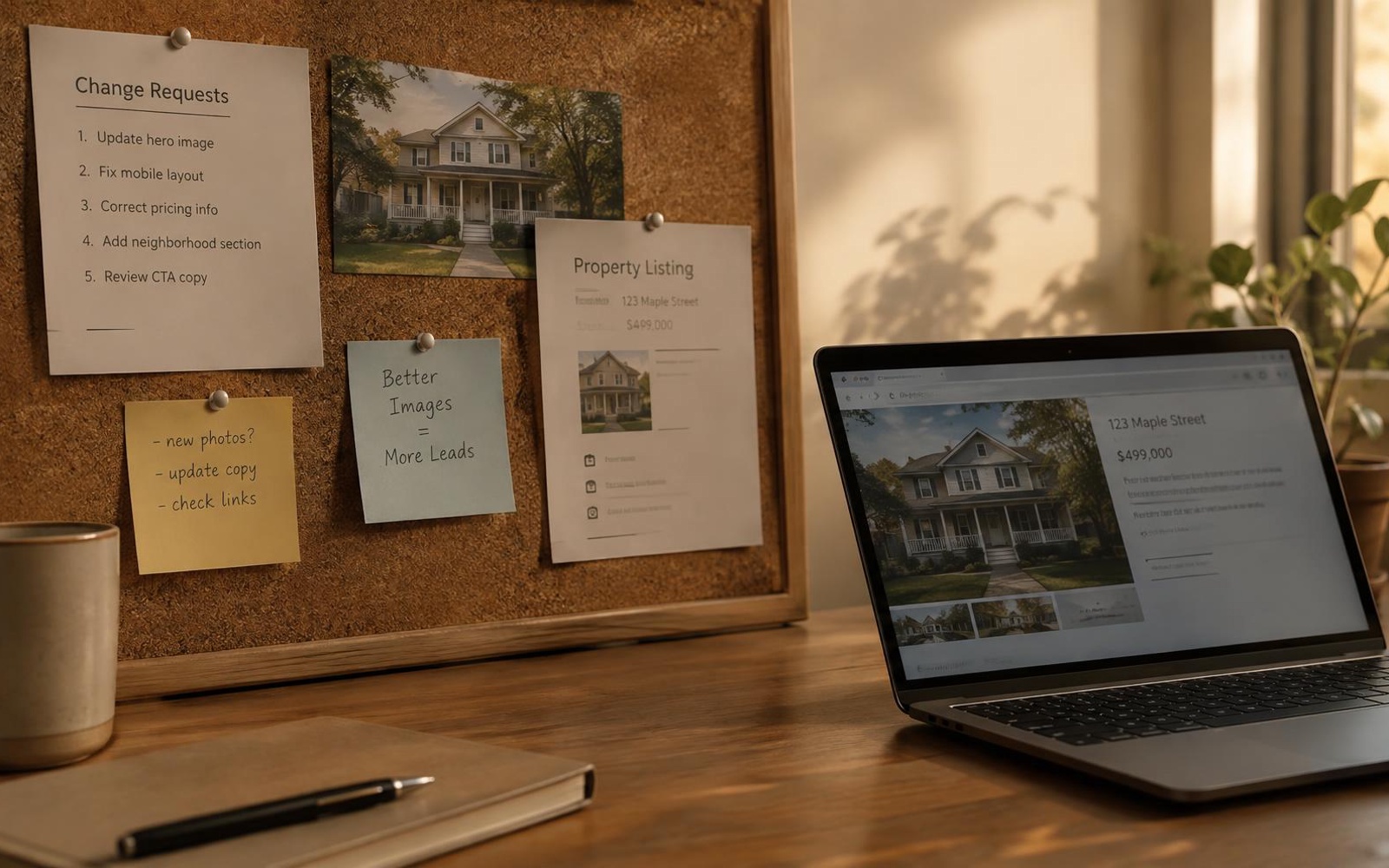
Landings runs twenty-five properties, and every one of them needs the same things kept current: what is available, what it costs, how to apply, where a resident signs in, and why this community rather than the one ten minutes up the road. Under the old model that work had to be briefed, built and released, because a hand-built site has no other way in. A price change, a new photograph, a floor plan that had been superseded, an application form asking for the wrong thing — each one left the building and came back weeks later. The site was never wrong on purpose. It was always slightly behind the business, because the only road to it ran through a build.
A bespoke build tied twenty-five live properties to a release cycle, so even a corrected price waited its turn instead of going live when it was noticed.
Requests collected in an inbox and were worked in the order they arrived, not in the order the business needed them — a limitation of the model rather than of anyone in it.
Availability was accurate on the day it was published and drifted from there — the worst of both worlds, because it looked authoritative and it was wrong.
A new community meant a new set of pages built from scratch, so a launch was a project with a timeline rather than an afternoon of content on a system that already knew what a listing was.
/02 — the twenty-five/
Each property is its own business, so each one got its own everything
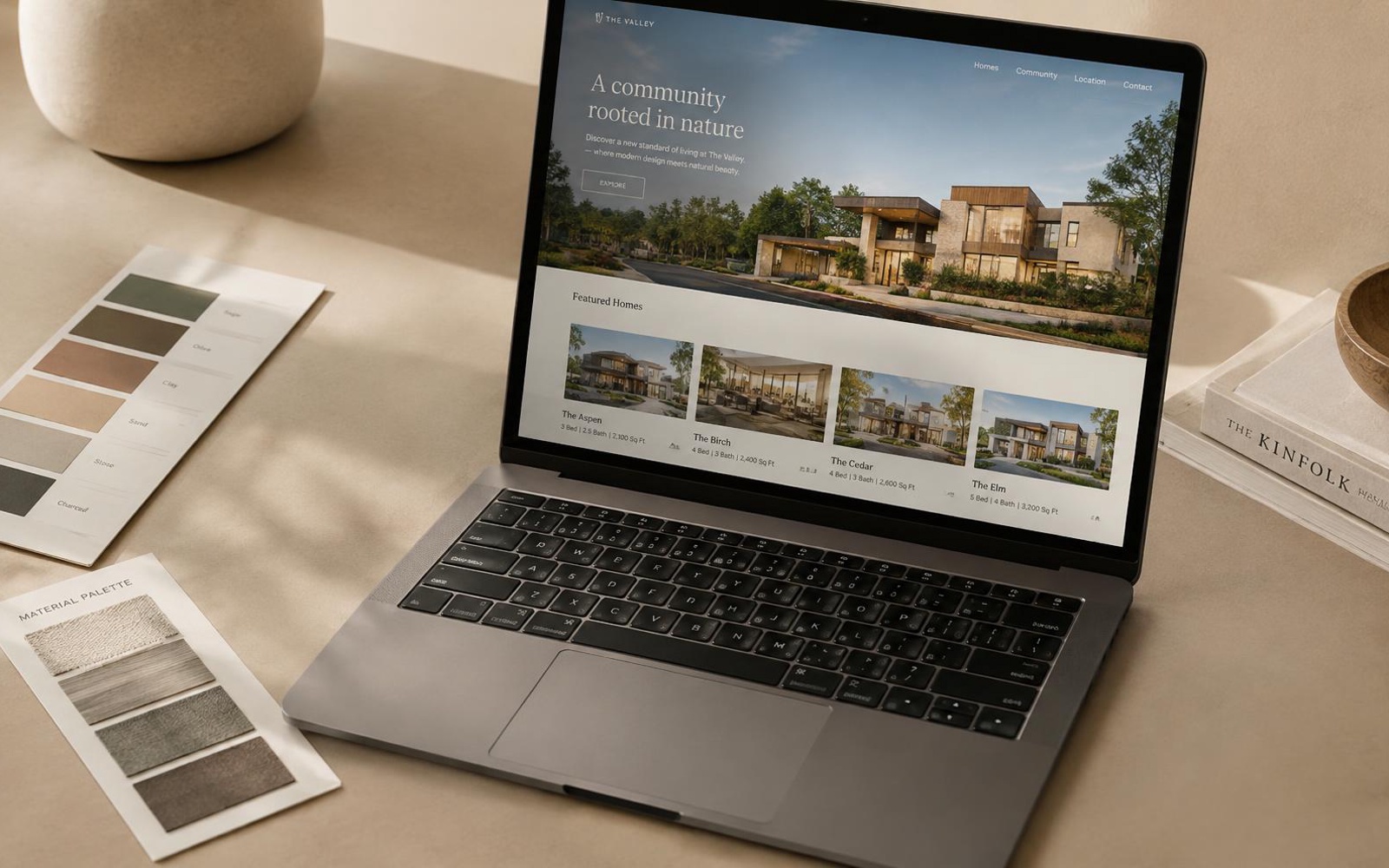
The twenty-five are not one brand with a postcode changed. Each has its own name, its own positioning, its own homes at their own prices, its own application process, and its own residents who expect to sign in and find their documents, their payments and their maintenance requests waiting. What they share is structure: a listing behaves like a listing, availability like availability, an application like an application. So the software holds one model and presents it twenty-five ways — a change to that model reaches every property at once, while the words, images and pricing stay purely local.
Listings carry real fields: size, bedrooms, price, availability date, and the status that matters — available, on hold, application pending, let.
An application flow that belongs to the property it is for, rather than a generic form emailed to an office.
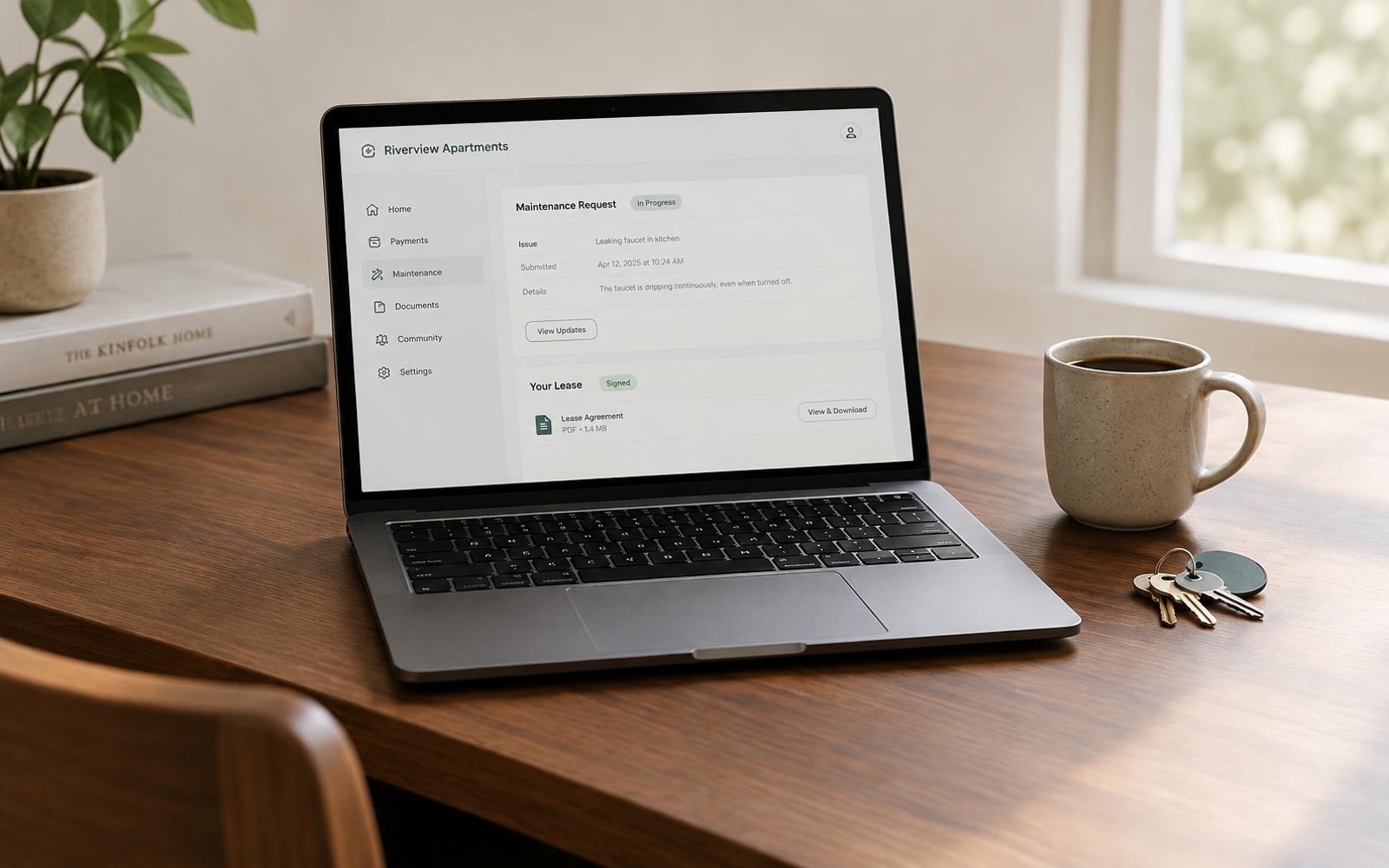
A resident portal per property, so a tenant signs in to their own building and sees their own documents and requests.
A value proposition written for each community and kept on its own pages, because the reason to live in one is rarely the reason to live in the next.
/03 — taking control/
Describe the change, and it is on the page
This is the part that changed the relationship. Landings now work on their own site through our AI Website Builder: a page created, a section added, a listing updated, a community reworded, all by saying what is wanted in plain language and reviewing the result. There is no brief, no hand-off and no waiting for a release. The guardrails are structural rather than restrictive — components, type scale and accessibility behaviour are fixed — so whatever the team asks for comes out looking like it belongs to that property, and nobody can accidentally publish something that breaks on a phone. When they see something wrong on a Tuesday morning, it is right by Tuesday afternoon.
Pages, sections and copy produced from a plain-language request, then reviewed and published by their own team.
Design, accessibility and responsive behaviour held by the system, so self-publishing does not mean self-sabotage.
Per-property settings keep twenty-five brands distinct without twenty-five codebases to maintain.
We kept the structure, the integrations and the support. The day-to-day publishing belongs to them.
/04 — after the sale/
The half of the site that is not marketing
Most property websites stop at the viewing request. Landings keeps going: an application, a decision, a lease, then a resident who needs a portal for the years afterwards. Putting that on the same platform as the marketing pages means a home that moves from available to application pending to let is the same record the resident signs in against, rather than three systems reconciled by hand each Friday. It also means the team can answer the question every developer gets asked — what is actually left in that community — without opening a spreadsheet.
Applications, decisions and lease records attached to the listing they belong to, not to a separate inbox.
Resident portals running per property, with documents, payments and maintenance in one place.
Availability moves through its states on one record, so the marketing page and the resident view never disagree.
Reporting across all twenty-five in one place, rather than a monthly rebuild of the same spreadsheet.
The results
/outcomes/
25
properties running on one system
Same day
from noticing a change to it being live
0
hand-offs needed between noticing a change and making it
1
record behind listings, availability and applications
Have a project like this one?
Tell us what you are working on. We will come back with a straight answer on scope, timeline and budget.