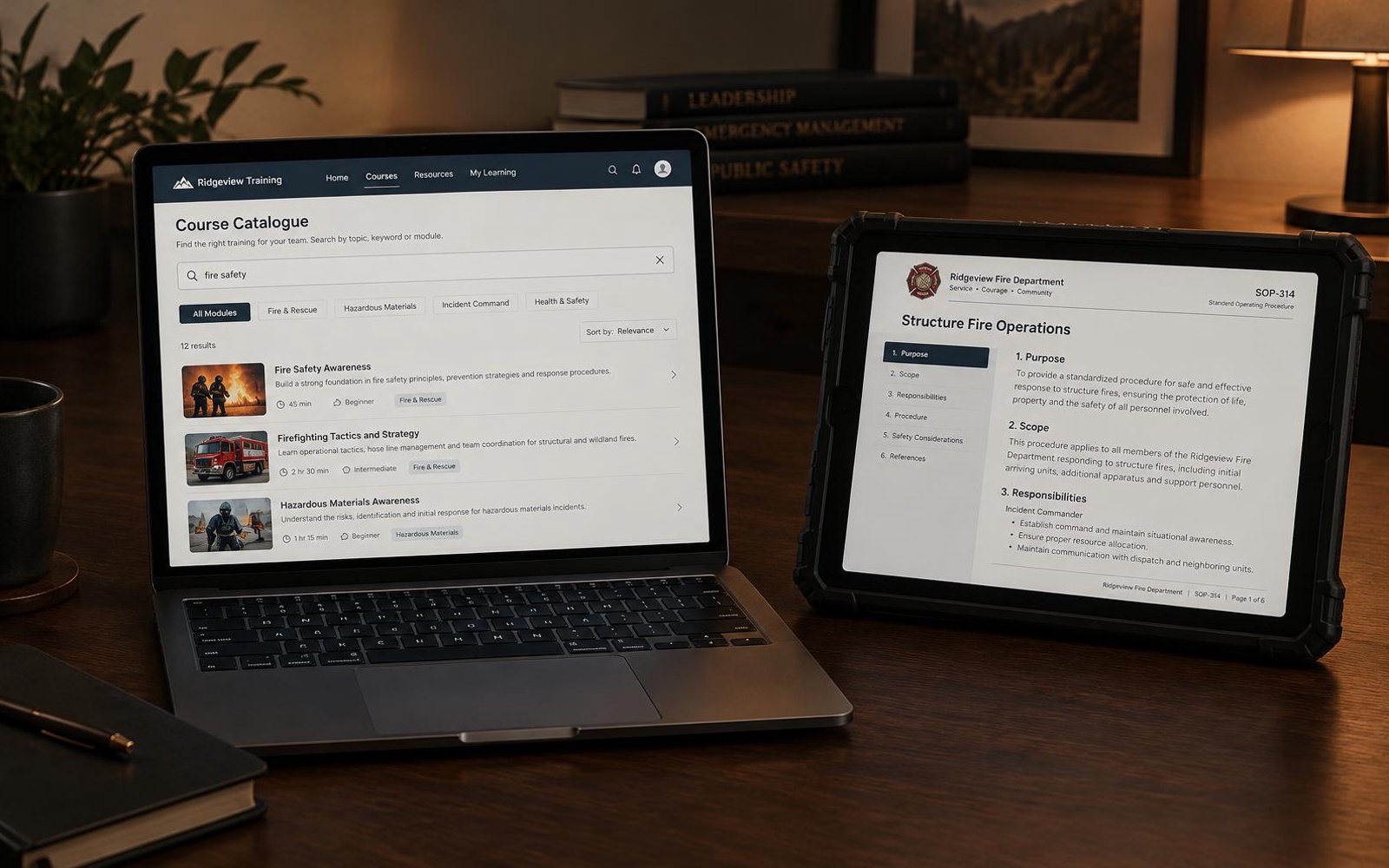
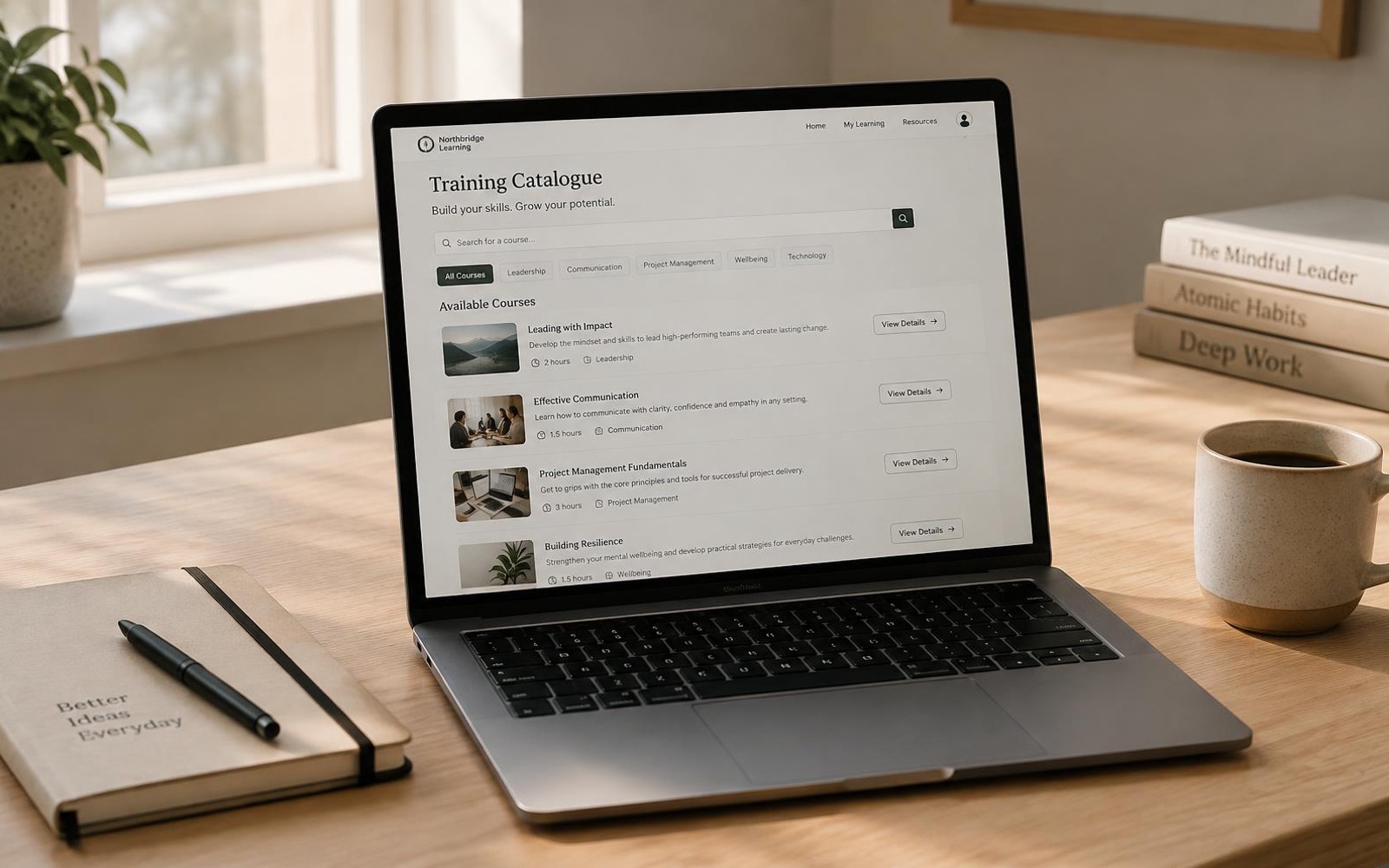
Two systems behind the insurance: a customised Moodle where hundreds of organisations each run their own catalogue of courses, and field guidelines a first responder will actually open on scene.
Glatfelter insures narrow niches — emergency services, education, religious organisations, healthcare. We built two systems behind them: a customised Moodle where hundreds of organisations each run their own catalogue of courses, and field guidelines a first responder will actually open on scene.
Project goals
/objectives/
01
A catalogue per organisation
Moodle expects one central catalogue. The customisation gives each of hundreds of organisations its own, searched by its own members.
02
One authoritative version of every guideline
Procedures live in a binder on the rig. The copy in the truck has to be the one the department adopted.
03
Program staff publish without us
Regulations change on their own timetable, so Glatfelter's teams publish courses and revise guidelines without developer time.
Our approach
/how we worked/
The learning platform is a customised Moodle: out of the box it expects one central catalogue, so each of hundreds of organisations got its own, searched by its own members on a phone in a firehouse bay. The guidelines system does the same for procedure — one authoritative version, reached by apparatus or scenario, revisions published once. Builds, integrations and support are ours end to end.
What we built
/in detail/
/01 — the learning platform/
A learning management system where every organisation has its own catalogue
The module a fire department requires is not the safeguarding material a diocese hands its volunteers. Moodle assumes one central catalogue they all share, so we reversed it: each organisation has its own, its people search the courses that are theirs, and the training starts from there.
Each organisation runs its own catalogue, rather than everyone drawing from one central list.
Glatfelter's staff add courses themselves, so new material appears without a release.
Adding an organisation is a catalogue setup, not a separate install.
100,000
learners trained on the platform we built and run
/02 — the field guidelines/
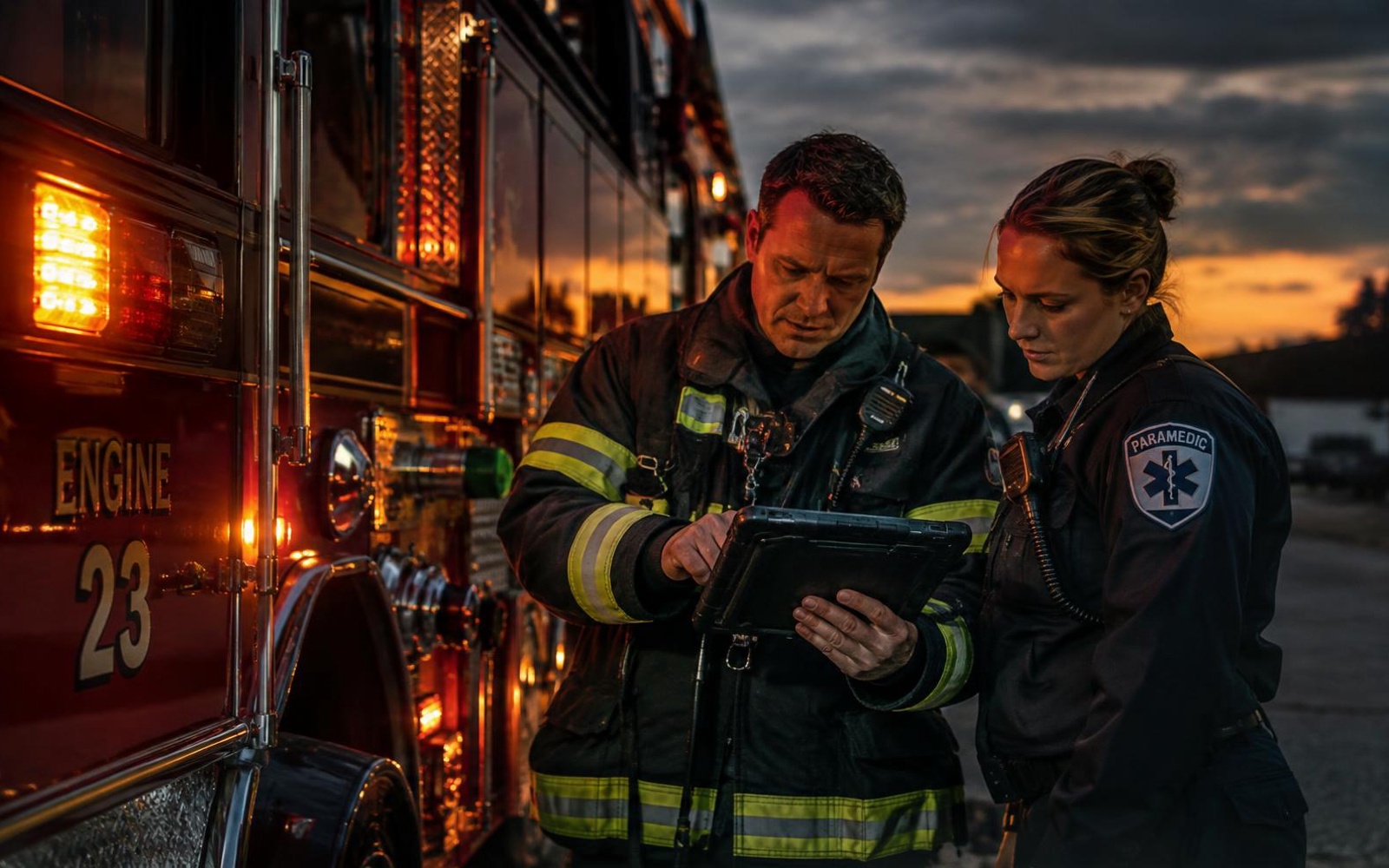
Standard operating guidelines a first responder will actually open
Standard operating guidelines are the procedures a department runs on: positioning an apparatus, arriving at a structure fire, who assumes command. Most live in a binder on the rig, often several revisions behind. We built a system that holds one authoritative version of each, and records who has read it.
One versioned source of truth, so the copy read on scene is the copy the department adopted.
Reached by apparatus, role or scenario, set in type that reads at arm’s length in bad light.
Acknowledgement recorded, and a revision published once to everybody.
The results
/outcomes/
100,000
learners trained on the platform we built and run
Hundreds
organisations each running their own catalogue
Have a project like this one?
Tell us what you are working on. We will come back with a straight answer on scope, timeline and budget.